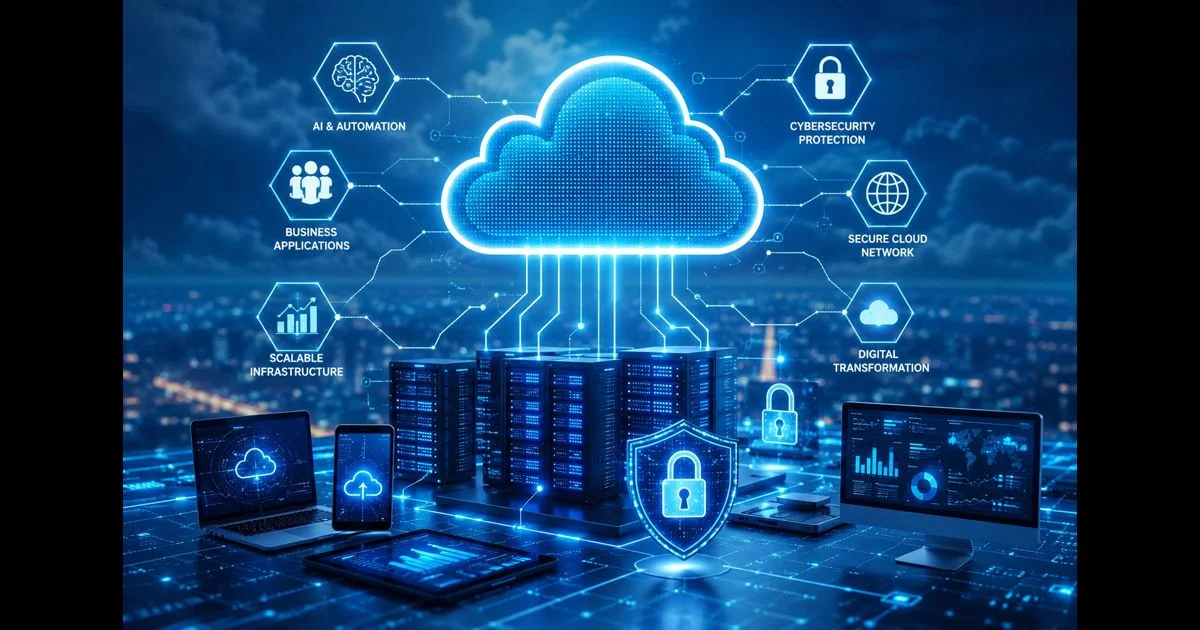
Cloud computing cloud computing QuikConsole Com concerns a technology area that affects how organizations run applications, store information, support employees, and recover from disruption. It should be understood as an educational subject, not as proof that any website is itself a cloud provider or operates infrastructure.
Cloud computing delivers computing resources over a network when they are needed. Those resources can include processing power, storage, databases, networking, security tools, and software. The important change is not simply that data sits elsewhere. It is that capacity, configuration, responsibility, and cost become ongoing operational decisions rather than one-time hardware purchases.
The National Institute of Standards and Technology identifies on-demand access, shared resource pools, rapid elasticity, and measured usage as core cloud characteristics. In practice, those characteristics can help an organization move faster, but only when its systems, access controls, and spending are managed deliberately.
Begin With the Workload, Not the Platform
A cloud move is strongest when it begins with a specific operational need. A customer-facing application with variable traffic may benefit from elastic capacity. A team spread across locations may need controlled access to shared software and data. A legacy system may need better backup and a credible recovery process before anything else changes.
Not every workload needs the same environment. Before selecting a service, document:
- The information the workload handles and its sensitivity
- Expected usage, peaks, and acceptable response time
- Recovery objectives for an outage or data loss
- Legal, contractual, and geographic requirements
- Dependencies on older systems, vendors, or specialized hardware
- The team responsible for operating and securing it
This prevents a common mistake: moving an application without understanding its dependencies, then discovering that identity systems, network connections, data transfers, or licensing create unexpected risk and expense.
Service Models Set the Boundary of Control
The best service model is the one that leaves the organization with the level of control it actually needs.
Infrastructure as a Service
Infrastructure as a Service provides virtual machines, storage, networking, and related building blocks. It gives technical teams substantial flexibility, but they remain responsible for operating systems, application configuration, patches, and many security decisions.
It can suit organizations that need custom environments or are modernizing systems gradually. The trade-off is a greater operational burden.
Platform as a Service
Platform as a Service provides a managed environment for building and running applications. The provider handles more of the underlying infrastructure, allowing developers to focus on application code and data.
This can reduce maintenance work and speed delivery. Teams still need to secure identities, application logic, secrets, data access, and deployment practices.
Software as a Service
Software as a Service delivers a finished application through a browser or client application. Examples include collaboration, accounting, customer relationship, and productivity tools.
It usually requires the least infrastructure administration, but it does not remove accountability. Administrators must still manage user access, retention settings, integrations, data exports, and appropriate use.
Serverless Services
Serverless services run code or tasks in response to events while the provider manages server capacity. They can be useful for short, event-driven work such as file processing, scheduled jobs, or application integrations.
Their convenience should be balanced against execution limits, observability needs, vendor-specific design, and cost patterns that may be difficult to predict at scale.
Public, Private, Hybrid, and Multi-Cloud Are Different Choices
A public cloud uses services operated by a third-party provider and shared across customers through logical isolation. It can offer broad service availability and rapid provisioning.
A private cloud dedicates resources to one organization. It may support particular control, customization, or regulatory needs, though it can require more investment and specialized operation.
A hybrid environment connects private infrastructure with public cloud services. It may be appropriate when some systems cannot move immediately or when information must remain within a controlled environment.
Multi-cloud means using services from more than one provider. It can reduce dependence on a single provider and allow teams to use a service that fits a particular workload. It also creates real complexity: separate identity models, billing structures, network designs, skills, and incident processes. Multiple providers do not automatically create resilience.
Security Is Shared, Not Outsourced
Cloud providers are responsible for protecting the facilities and foundational services they operate. Customers remain responsible for how their accounts, identities, data, applications, and configurations are used. The exact boundary varies by service model, so it must be checked in the provider’s documentation and contract.
A practical security baseline includes:
- Multifactor authentication for privileged accounts
- Least-privilege access with regular permission reviews
- Separate administrative accounts from daily user accounts
- Encryption for sensitive information in transit and at rest
- Central logging, alerting, and retained audit records
- Secure storage for secrets, keys, and credentials
- A patching and vulnerability-management process
- Tested procedures for account compromise and service disruption
Cloud security also depends on people and process. An exposed storage location, an overly broad role, or an unused account can cause serious harm even when the underlying platform is well protected. For a deeper discussion of identity, monitoring, and defensive practice, see QuikConsole’s guide to cybersecurity and data protection.
Treat Data Location and Recovery as Design Requirements
Data should be classified before it is moved. Public material, internal records, confidential business data, customer information, and regulated records may each require different access, retention, encryption, and location controls.
Ask where primary and backup copies will reside, who can access them, how long they are retained, and how they can be exported. A backup is valuable only when it can be restored within the time the organization can tolerate.
Recovery planning should cover more than a lost file. It should address accidental deletion, ransomware, a failed deployment, a regional disruption, a vendor-side outage, and loss of an administrator account. Run restoration exercises at a realistic scale. A plan that has never been tested is an assumption, not evidence.
Cost Control Must Be Built Into Daily Operations
Pay-as-you-go billing can be useful, but it does not guarantee lower costs. Idle compute, forgotten storage snapshots, duplicated data transfers, oversized databases, and services left running after a project can create avoidable charges.
Effective cost management starts with ownership. Every account, environment, and major resource should have a responsible team and a clear business purpose. Budgets, alerts, tagging standards, and regular reviews help make spending visible.
Teams should measure cost alongside reliability and performance. The cheapest setup may be unable to recover quickly; the most resilient design may cost more than a low-risk workload needs. A sound decision makes that trade-off explicit.
Avoid Lock-In Through Documentation and Portability
Provider-specific services can be highly useful, especially when they reduce operational work. The risk is not using them; the risk is using them without understanding the consequence of leaving.
Keep an inventory of services, data stores, integrations, access roles, and custom configurations. Document how important data can be exported, how an application could be rebuilt, and what contractual notice periods apply. Use open formats where practical and avoid placing critical knowledge in one individual’s account or memory.
Exit planning also improves incident readiness. An organization that can describe its systems, data, and dependencies clearly is better equipped to recover from failure, change providers, or redesign a service.
Cloud Computing Supports Change Only When Governance Keeps Pace
Cloud systems can support faster delivery, remote collaboration, resilient operations, analytics, and automation. They can also multiply weak practices when access, data quality, architecture, and accountability are neglected.
The most durable approach is incremental. Start with a workload that has a defined owner and measurable outcome. Establish security and cost controls early. Test recovery. Review performance and spending after deployment. Then use the result to improve the next decision.
Cloud adoption is one part of a wider operational shift. It works best when technology choices align with people, processes, risk management, and clear business priorities—principles also central to digital transformation.
Frequently Asked Questions
Is cloud computing the same as online storage?
No. Online storage is one cloud service. Cloud computing also includes servers, databases, networking, software platforms, security services, and application delivery.
Is cloud computing secure?
It can be secure, but security depends on both the provider and the customer. Strong identity controls, correct configuration, monitoring, encryption, and tested recovery procedures remain essential.
Does cloud computing always cost less?
No. It can reduce upfront hardware costs and allow capacity to scale, but poor governance, idle resources, and unsuitable architecture can increase spending.
What should be checked before moving a system to the cloud?
Check data sensitivity, access needs, performance requirements, dependencies, recovery objectives, compliance obligations, operational ownership, and expected cost.
Can a small organization use cloud services safely?
Yes. Smaller organizations can benefit from managed services, but they should still protect administrator accounts, limit access, back up important data, monitor spending, and understand their recovery options.