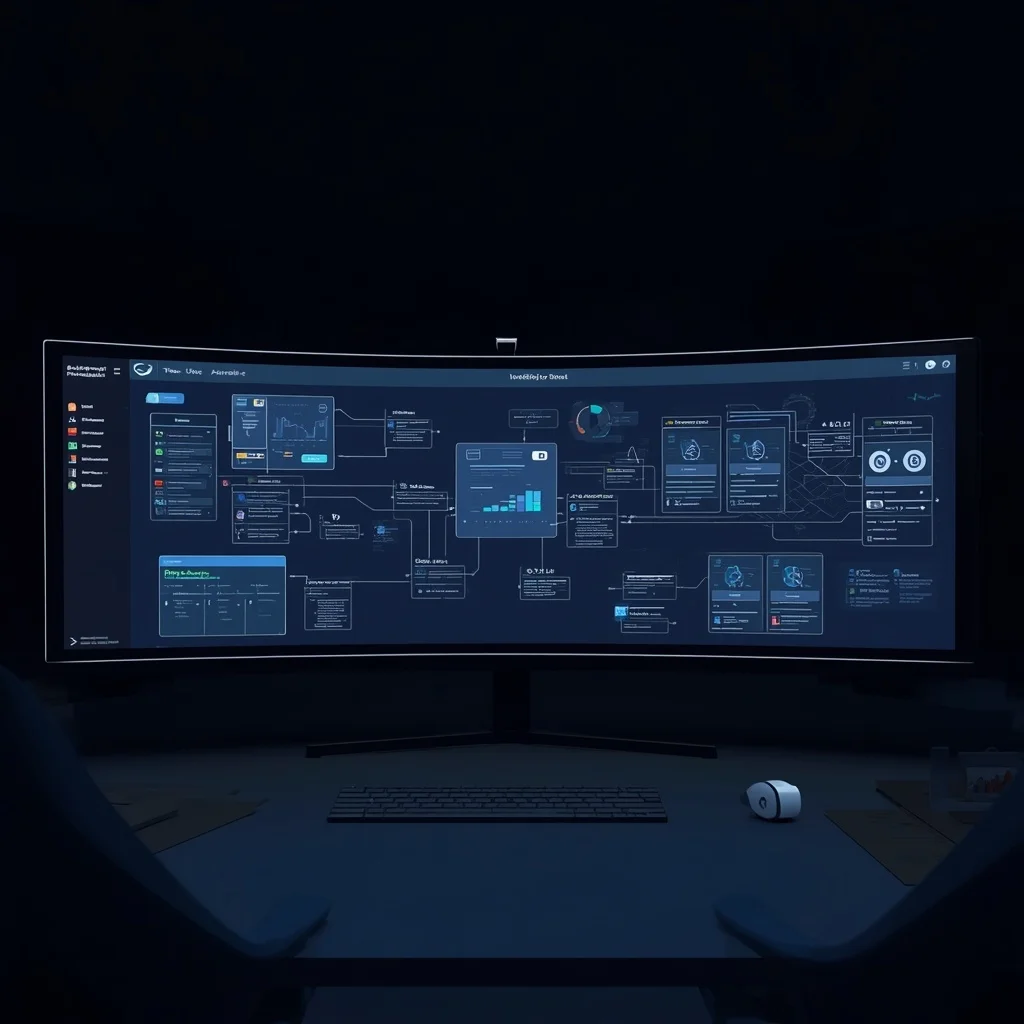
Digital work increasingly involves repetitive tasks, multiple applications, and processes that need to be completed in a specific order. When these activities are handled manually, they can consume time and make it harder to maintain consistency.
Automation offers a way to simplify repetitive digital processes. When automation is combined with artificial intelligence, systems can potentially handle more complex activities involving data, patterns, decisions, and workflow steps.
For users exploring QuikConsole automation, understanding the relationship between AI-driven tools, workflow automation, task management, and digital productivity is important. A centralized console can serve as an environment where different digital activities are organized and monitored.
For a broader introduction, see our complete guide to QuikConsole and digital console platforms.
What Is Workflow Automation?
Workflow automation is the use of technology to perform predefined steps in a process with reduced manual intervention.
A basic manual workflow might look like:
Receive task → Review information → Perform action → Update status → Notify user
With automation, some of these steps can happen automatically according to predefined rules.
For example, when a task reaches a particular stage, an automated system may update its status or trigger another process.
Automation is particularly useful for repetitive processes where the same sequence of actions occurs frequently.
What Does AI-Driven Automation Mean?
AI-driven automation combines traditional automation with artificial intelligence technologies.
Traditional automation generally follows predefined rules. AI-based systems can potentially analyze information, identify patterns, process natural language, or assist with decisions based on available data.
The distinction can be simplified as:
Traditional automation: Follow predefined instructions.
AI-driven automation: Use AI capabilities to process information and assist with more dynamic tasks.
The exact capabilities depend on the technology being used. AI should not be assumed to operate independently or make reliable decisions in every situation.
How QuikConsole Fits Into Automated Workflows
A digital console can provide a centralized environment for managing tasks and workflows.
In an automation-focused workflow, a console can help users understand what is happening, review task progress, and interact with digital tools.
For example, a simplified workflow might be:
Task Created → Automated Processing → Status Update → Human Review → Completion
This structure combines automation with human oversight.
The specific automation capabilities available through QuikConsole should be verified against the platform’s current features rather than assumed from the general concept of AI-driven workflows.
Benefits of Workflow Automation
Automation can provide several practical benefits when it is applied to suitable processes.
Saves Repetitive Work
Automating repetitive steps can reduce the amount of manual effort required.
Improves Consistency
A predefined workflow can help ensure that the same process is followed consistently.
Reduces Manual Errors
Removing unnecessary manual steps may reduce certain types of human error.
Speeds Up Routine Processes
Automated actions can often be performed faster than repeatedly completing the same steps manually.
Makes Processes Easier to Track
Structured workflows can make it easier to understand where an activity currently stands.
These benefits are most relevant when the automated process is properly designed and monitored.
AI Automation and Task Management
Task management and automation work well together because tasks provide a structured representation of work.
For example, a content workflow could include:
- Create content task
- Assign task
- Generate or prepare content
- Review content
- Optimize content
- Publish content
- Mark task as complete
Some of these stages may be suitable for automation, while others require human judgment.
This is why automation should generally complement task management rather than completely replace human involvement.
Our guide on QuikConsole productivity, tasks, and workflows covers the fundamentals of organizing tasks into repeatable workflows.
Using Dashboards to Monitor Automation
Automation becomes easier to manage when users can see what automated processes are doing.
A dashboard can provide visibility into:
- Active workflows
- Completed tasks
- Pending actions
- Process status
- Errors or exceptions
- Tasks requiring human review
This visibility is important because automation does not eliminate the possibility of errors.
A monitoring dashboard can help users identify issues before they affect the rest of a workflow.
Learn more about this concept in our QuikConsole dashboard and monitoring guide.
Examples of Digital Workflow Automation
Automation can be applied to many types of digital processes.
Content Workflows
A publishing workflow could automatically move content between stages after specific actions are completed.
For example:
Draft → Review → Approved → Published
Customer Communication
A system may automatically send notifications when a task reaches a particular stage.
Project Management
Recurring project activities can be organized into predefined workflow stages.
Data Processing
Certain repetitive data operations can be automated according to established rules.
Software Development
Development workflows may include automated testing, deployment processes, or status updates.
The suitability of automation depends on the process and the tools involved.
AI-Driven Automation for Businesses
Businesses often deal with repetitive processes across departments.
Marketing, customer service, administration, development, and operations can all contain activities that follow predictable patterns.
AI-driven tools can assist with tasks such as:
- Information classification
- Content assistance
- Data analysis
- Text processing
- Workflow recommendations
- Automated responses
- Pattern identification
However, organizations should evaluate accuracy, privacy, security, and human oversight before introducing AI into important processes.
Automation for Freelancers
Freelancers can also benefit from automation because they often perform repetitive administrative activities.
For example, a freelancer could create a workflow for handling a new client project:
Client Request → Project Setup → Task Creation → Production → Review → Delivery
Some administrative steps can potentially be automated, allowing more attention to be given to the actual client work.
The goal is not to automate every activity. Instead, automation should be used where it creates genuine efficiency.
Automation for Marketers
Digital marketing involves many repeatable activities.
A marketing workflow could include:
Research → Planning → Content Creation → Review → Publishing → Performance Monitoring
Automation can assist with selected stages of this process, particularly repetitive administrative actions.
Marketers should still review important content and campaign decisions because automated systems can produce inaccurate or unsuitable results.
Automation for Developers
Software development is another area where workflows can be structured around repeatable processes.
A development workflow might look like:
Code → Test → Review → Deploy → Monitor
Automation can assist with certain technical stages, such as running tests or triggering deployment processes when predefined conditions are met.
Developers can then focus their attention on code quality, architecture, troubleshooting, and other activities requiring human expertise.
AI Automation and Human Oversight
One of the most important considerations when using AI-driven automation is deciding which activities should remain under human control.
Automation can handle repetitive or clearly defined tasks effectively, but not every decision should be delegated to an automated system.
Human review can be particularly important when a workflow involves:
- Sensitive information
- Financial decisions
- Legal information
- Security controls
- Customer-facing communication
- Business-critical decisions
A useful approach is to automate predictable steps while maintaining human review at important decision points.
Security Considerations for Automation
Automated workflows may require access to applications, accounts, files, or other digital resources.
This creates security considerations that should not be ignored.
Users should:
- Use strong and unique passwords
- Limit application permissions
- Review connected services
- Protect API credentials and access tokens
- Keep software updated
- Monitor automated activity
- Remove unnecessary access
Security should be considered during workflow design rather than added only after an automation system is deployed.
Common Automation Mistakes
Automating a Bad Process
Automation makes a process faster, but it does not automatically make the process better.
Before automating something, review the workflow and remove unnecessary steps.
Automating Everything
Some tasks require human judgment and should remain manual.
Ignoring Errors
Automated systems can fail. Workflows should include appropriate monitoring and error handling.
Poor Documentation
Users should understand what an automated workflow does and what happens when something goes wrong.
Excessive Permissions
Automation tools should receive only the permissions they actually require.
How to Start With Workflow Automation
Users who are new to automation can begin with simple processes.
Step 1: Identify Repetitive Tasks
Look for activities that happen regularly.
Step 2: Map the Process
Write down every step from beginning to end.
Step 3: Find Automation Opportunities
Identify steps that follow predictable rules.
Step 4: Keep Important Reviews Manual
Decide where human approval is necessary.
Step 5: Monitor the Workflow
Use dashboards or monitoring tools to identify problems.
Step 6: Improve Over Time
Review the workflow regularly and adjust it as requirements change.
Frequently Asked Questions
What is AI-driven workflow automation?
AI-driven workflow automation combines automated processes with artificial intelligence capabilities that can help process information, identify patterns, or assist with certain tasks.
Can automation improve productivity?
Automation can reduce repetitive manual work and make recurring processes more consistent, which may improve productivity when the workflow is properly designed.
What is the difference between automation and AI automation?
Traditional automation generally follows predefined rules, while AI automation can use artificial intelligence to process information or assist with more dynamic tasks.
Should every task be automated?
No. Tasks involving important decisions, sensitive information, or human judgment may require manual review.
Can dashboards monitor automated workflows?
Dashboards can provide visibility into workflow status, completed activities, pending tasks, and potential issues, depending on the platform’s available functionality.
Final Thoughts
AI-driven automation is becoming an important part of modern digital workflows. It can reduce repetitive work, organize processes, and help users manage large numbers of recurring activities.
For a platform such as QuikConsole, automation can be considered alongside task management, dashboards, workflows, and digital tools rather than as an isolated feature.
The most effective approach is usually to automate suitable repetitive activities while maintaining human oversight where accuracy, security, and judgment matter.